Water emergencies
Structural Drying & Dehumidification in Joliet, IL
Dry to the touch is not dry. Wood and drywall can hold water for days after the surface feels fine.
- Daily readings logged
- Answered 24/7
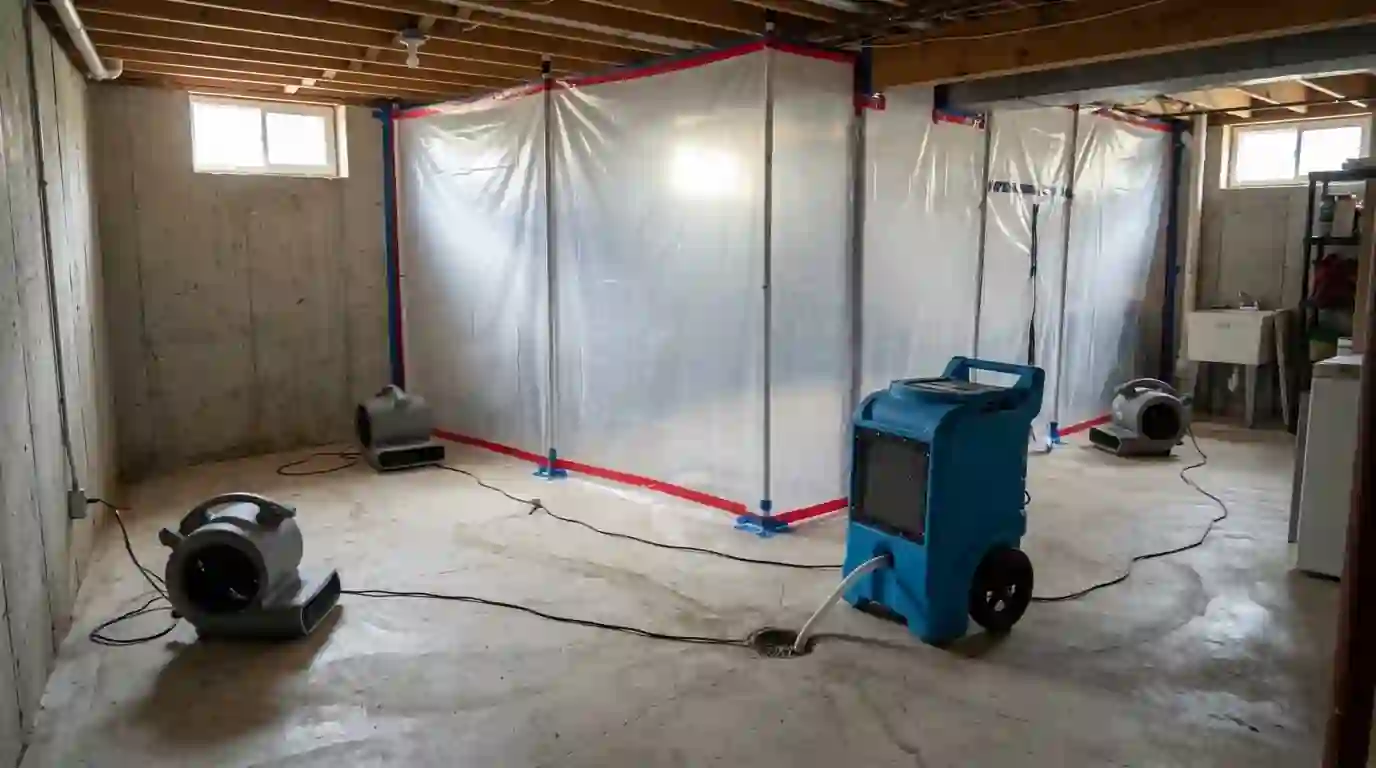
What structural drying & dehumidification involves
Structural drying uses air movers, low grain dehumidifiers and sometimes heat to pull moisture out of framing, subfloor, drywall and concrete. We measure each material every day and stop only when readings match a dry reference in your home.
Drying is a science of moving air and pulling water vapor out of it. Air movers sweep moisture off wet surfaces, dehumidifiers take it out of the air, and the room is kept closed so the equipment is not fighting outdoor humidity. Done right, most rooms dry in three to five days.
We take a dry standard reading from an unaffected part of your house, then track every wet area against it. If a wall is not drying as expected, we open a small hole at the base, inject air into the cavity or add heat rather than waiting and hoping.
Signs to watch for
- Walls or floors that read wet days after a leak was fixed
- Swelling at the bottom of baseboards or door casings
- Cupping in hardwood or laminate
- Condensation on windows after a water loss
- A damp, heavy feel to the air in a basement
Joliet summers are humid, so a basement left open to the outdoors can stay damp for weeks. We keep drying areas closed and use low grain dehumidifiers that keep working when the air outside is muggy.
Water emergencies
What Joliet homes add to the job
Most Will County homes sit on heavy glacial clay. When the ground is full after a spring thaw or a July cloudburst, water has nowhere to go but against the foundation, so a wet basement in Joliet is rarely a one-time event. We dry the space, then show you where the water came in.
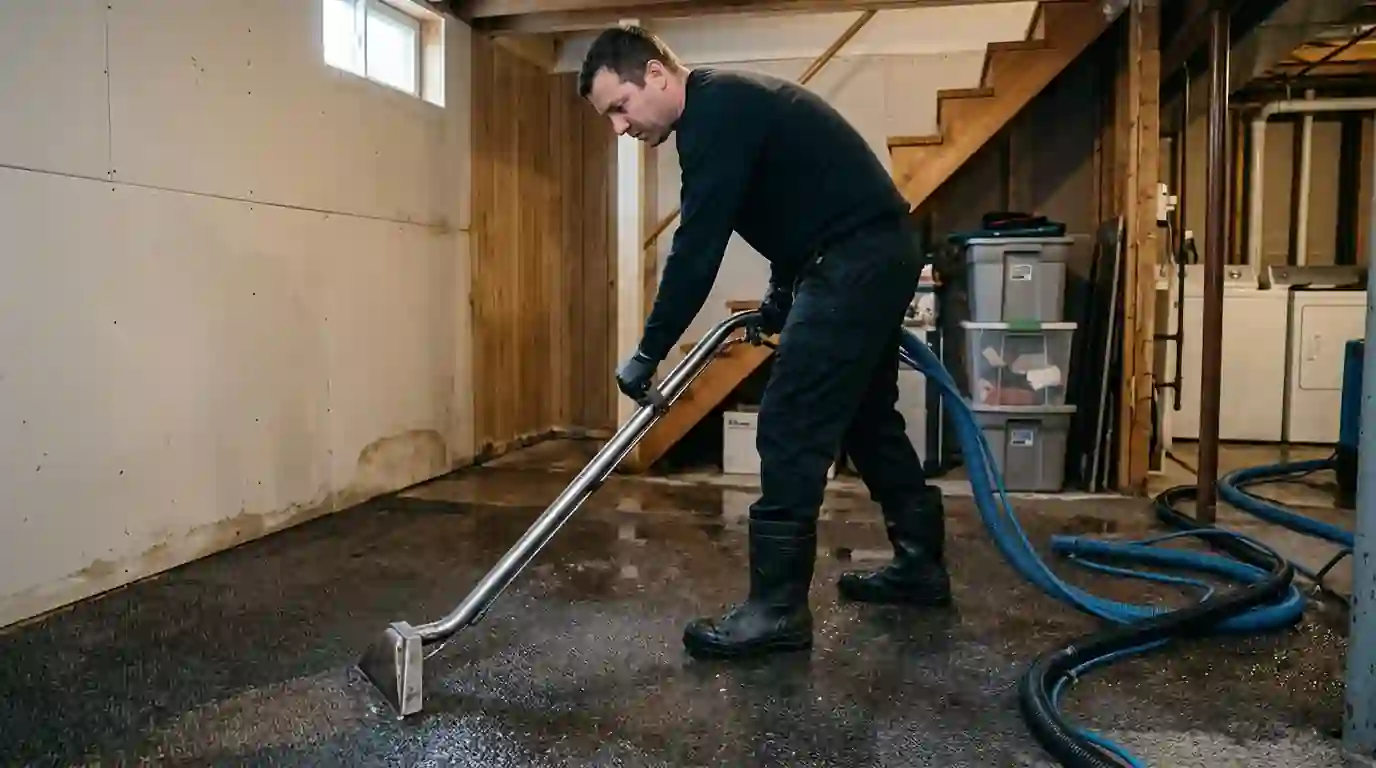
Step by step
How the job runs
Dry standard
We read moisture in an unaffected room of the same materials so we know what dry means in your home.
Equipment plan
Air movers and dehumidifiers are sized to the room volume and how wet the materials are.
Containment
Plastic barriers keep drying air where it is needed and lower the energy cost of running equipment.
Daily readings
Every wet point is metered each day and written in a drying log you can see.
Final check
When every point matches the dry standard, equipment comes out and repairs can start.
Typical cost
What it usually costs in the Joliet area
A range, not a quote. We give you a written scope after the inspection. Wondering how much wall comes out? Try the flood cut calculator. See every range on the cost ranges page.
$640 to $2,890
for three to five days of equipment and daily monitoringWhat moves the number:
- Number of air movers and dehumidifiers needed
- Days of drying required by the materials
- Cavity drying or heat for plaster, hardwood or concrete
Questions about structural drying & dehumidification
Can I turn off the equipment at night?
Please do not. Drying works because it runs continuously. Turning it off lets moisture settle back into materials and adds days to the job.
How much electricity does drying equipment use?
A typical setup uses about as much as a few space heaters. For a multi-day job it is usually a modest amount on the electric bill, and many claims include it.
Why do you need to drill holes in my walls?
Small holes at the base, hidden by baseboard, let us push dry air into the wall cavity. It is often the difference between drying a wall and replacing it.
What is a drying log?
It is a record of moisture readings for each wet spot, every day. It shows when the job is done and gives your adjuster proof that drying was done properly.
Water where it should not be?
Call the Joliet line any hour. A person answers, asks four quick questions and sends an Evanwood crew.