What dries fast and what does not
Drywall, carpet that has been floated and framing lumber dry fairly quickly with good airflow and dehumidification. Concrete holds water deep in the slab and walls and takes longer. Hardwood floors need slow, controlled drying to avoid cracking. Plaster can take more time than drywall but is often worth saving.
Why some basements take a week or more
Water that sat for days soaks deeper. Contaminated water means more material has to come out, and the remaining surfaces need cleaning before drying. Basement walls finished tight to the concrete trap moisture behind them. And on a muggy July week in Joliet, a basement left open to outside air can barely dry at all, which is why we keep the space closed and let dehumidifiers do the work.
How we know it is dry
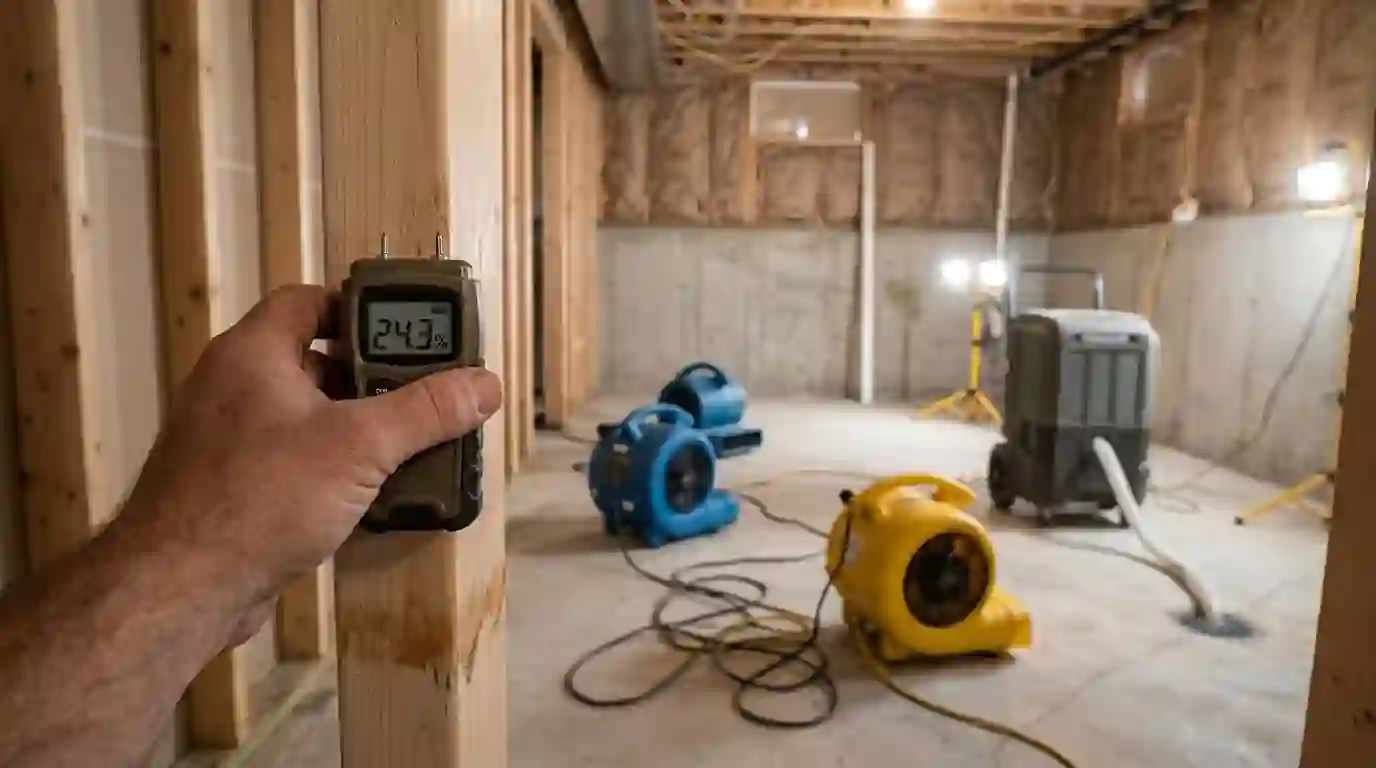
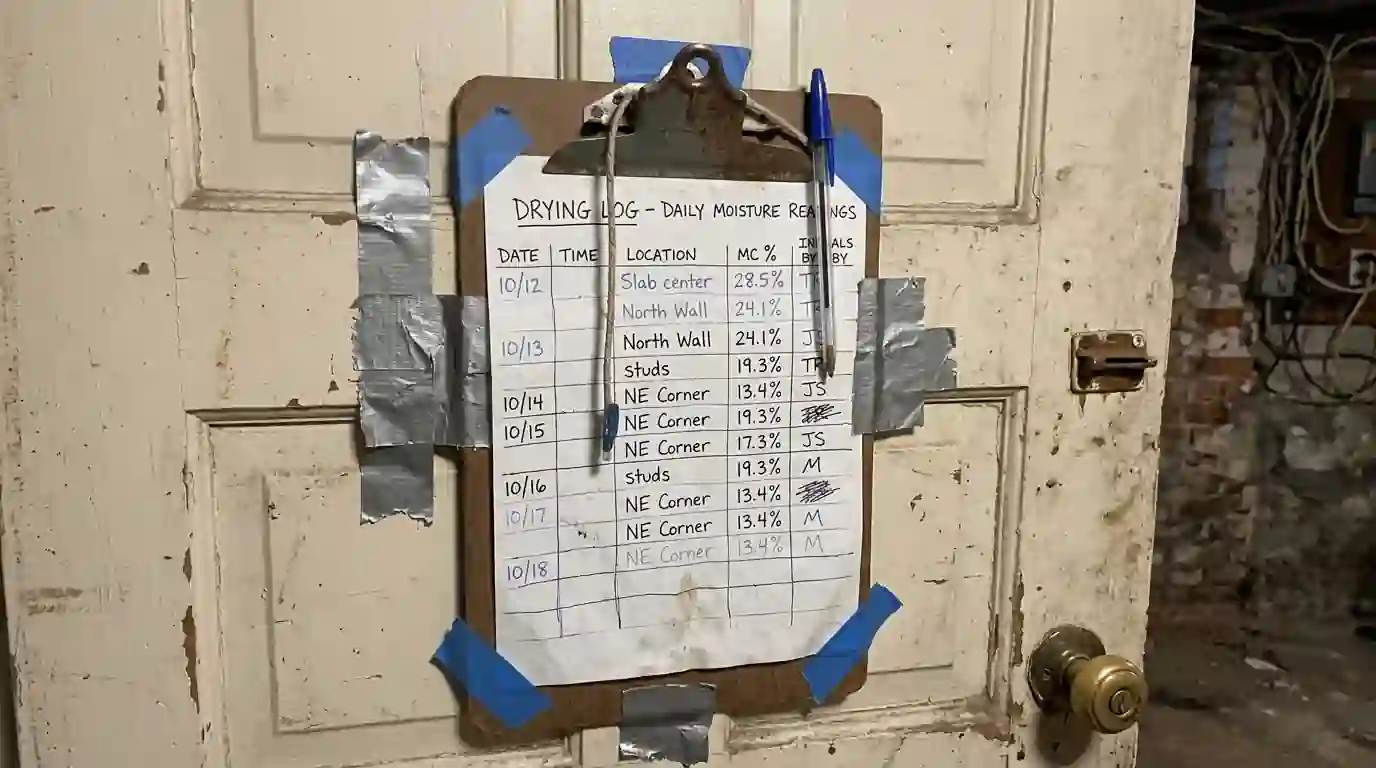
We do not go by feel or by the calendar. Before drying, we take readings in a part of your home that did not get wet, made of the same materials. That is the dry standard. Every wet spot is metered each day and written in a drying log. When the wet areas match the dry standard, equipment comes out. Closing walls or laying new floor before that is how mold ends up behind new drywall.
Can you speed it up?
Leave the equipment on, keep doors and windows closed, and let us move fans as areas dry. Do not turn up the heat on your own; uncontrolled heat can damage wood and spread humidity to the rest of the house. Removing wet pad and baseboard on day one does more to speed drying than anything else.
What happens after drying
Once the readings say dry, rebuild can start: drywall, trim, flooring and paint. Many people use this moment to make the basement more water-tolerant, with mold-resistant drywall, a small gap at the floor and flooring that can handle a spill.
Typical drying times by material
Drywall and framing usually reach dry in three to four days once wet drywall at the bottom is removed and air is moving. Carpet that was floated and kept can dry in two to three days. A concrete slab can take four to seven days, longer if it sat wet for days or the basement was finished over it with a vapor barrier. Hardwood often needs five to ten days of controlled drying. Plaster walls vary but often fall between drywall and concrete.
Why humidity outside matters
Dehumidifiers pull water out of the air inside the drying area. If the basement door is left open to a humid house, or windows are open on a muggy day, the equipment is drying the whole neighborhood. Keeping the work area closed is one of the simplest things you can do to keep drying on schedule.
Signs drying is going well
Readings drop every day. The musty smell fades rather than growing. Equipment exhaust feels warm and dry. If readings stall for two days in a row, we change something: move fans, add a dehumidifier, open a wall cavity or add heat.