Start with safety, not the water
If water is near outlets, a furnace, a water heater or extension cords, do not walk into it. Turn off power to the basement at the breaker panel if you can reach the panel without stepping in water. If the panel is in the basement and the floor is wet around it, stay upstairs and call us. Water and live circuits are the one part of this that can hurt you.
Figure out why the pump stopped
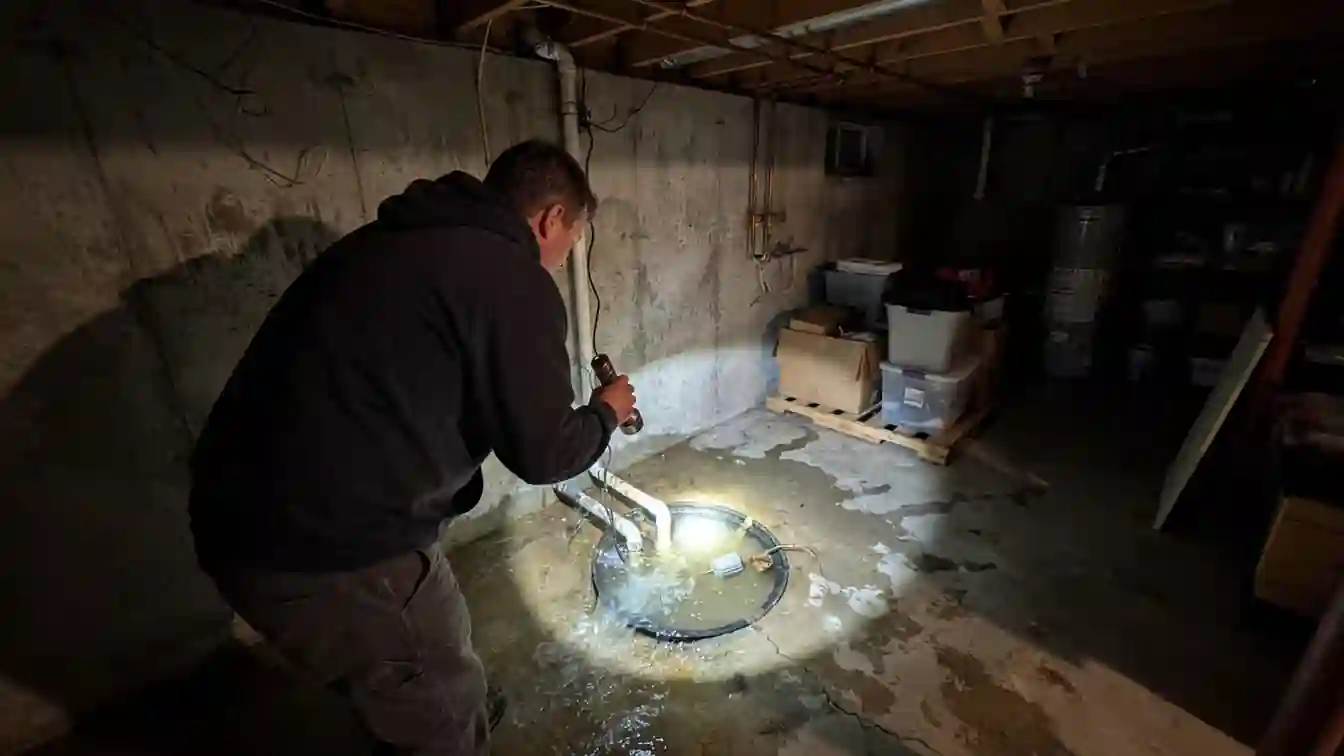
Most failures fall into four groups. The power is out. The breaker or GFCI outlet tripped. The float switch is stuck against the side of the pit. Or the pump itself burned out. If power is on in the rest of the house, check the outlet the pump plugs into. A GFCI that tripped can often be reset. If the float is stuck, it can sometimes be freed with a broom handle from a dry spot. Do not reach into the pit with your hands while the pump is plugged in.
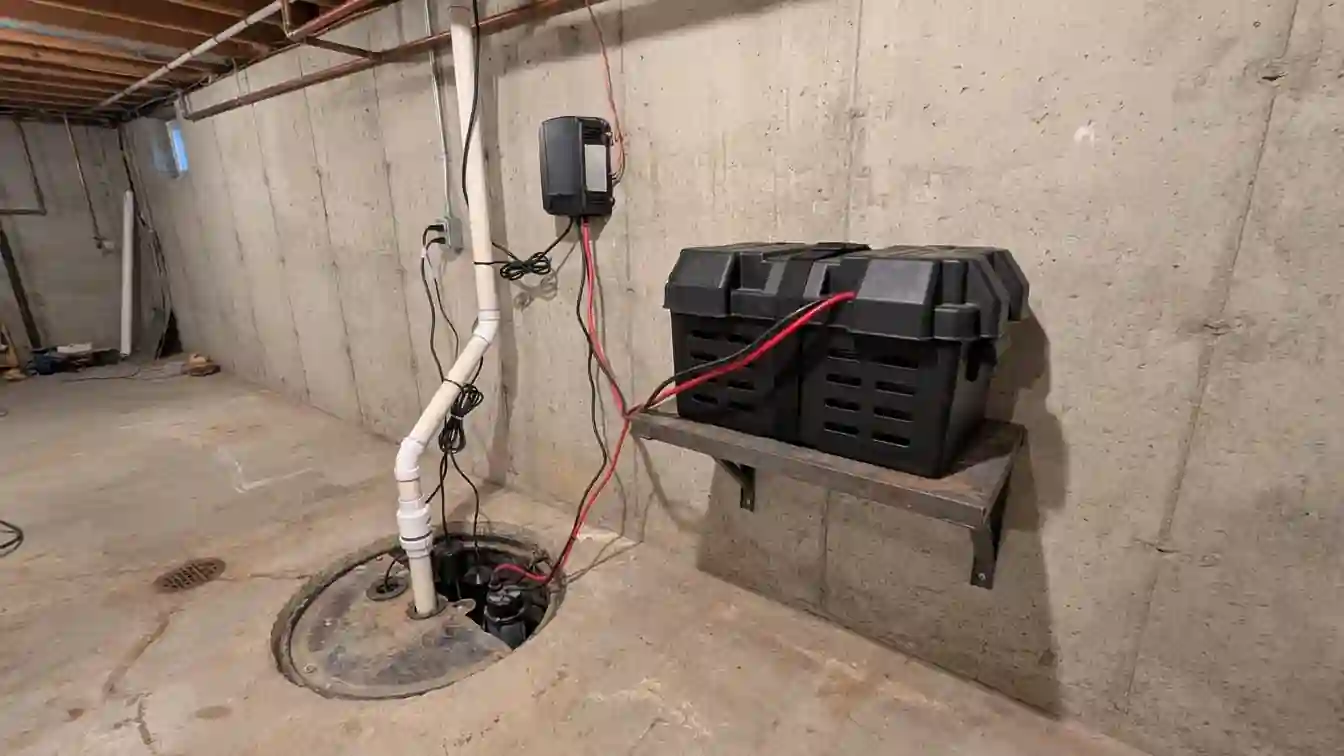
If the power is out on the whole block, there is not much you can do without a backup pump or a generator. That is exactly the situation a battery backup is built for.
Slow the water down
Even a little help buys time. Point downspouts away from the house and make sure their extensions are attached. If you have a second pump, a wet vac or a utility pump, use it to keep the pit from overflowing. Move things off the floor: boxes, rugs, electronics, anything on the lowest shelf. Paper and photos go upstairs first.
What to save and what to leave
Furniture with wood legs can sit on foil, plastic lids or blocks so it does not wick water. Area rugs should come up and go somewhere they can drain. Wall-to-wall carpet is best left in place until we can extract it. Pulling up wet carpet alone is heavy and easy to tear, and the pad underneath is coming out anyway.
When to call
Call as soon as water is spreading across finished floor or reaching drywall. Sump water is usually clean groundwater, and clean water that is extracted and dried within a day or two can often be handled without tearing out much. Water that sits for days or mixes with a floor drain backup changes category, and the job gets bigger. The line is answered around the clock at (815) 246-0708.
After the storm
Once things are dry, look hard at why it happened. A pump older than seven to ten years, no battery backup, or a pit that fills every few minutes in spring are all signs it is time to upgrade. A high-water alarm costs very little and gives you warning before the floor gets wet. Our sump pump installation page explains the options.
Questions we ask when you call
How deep is the water, and is it still rising? Is the pit overflowing or is water also coming up a floor drain? Is the basement finished? Is power on? Those four answers tell us whether to bring a trash pump, how many air movers to load and whether we are dealing with clean groundwater or something worse. Having the answers ready saves time on a night when every minute matters.