Start with the slab
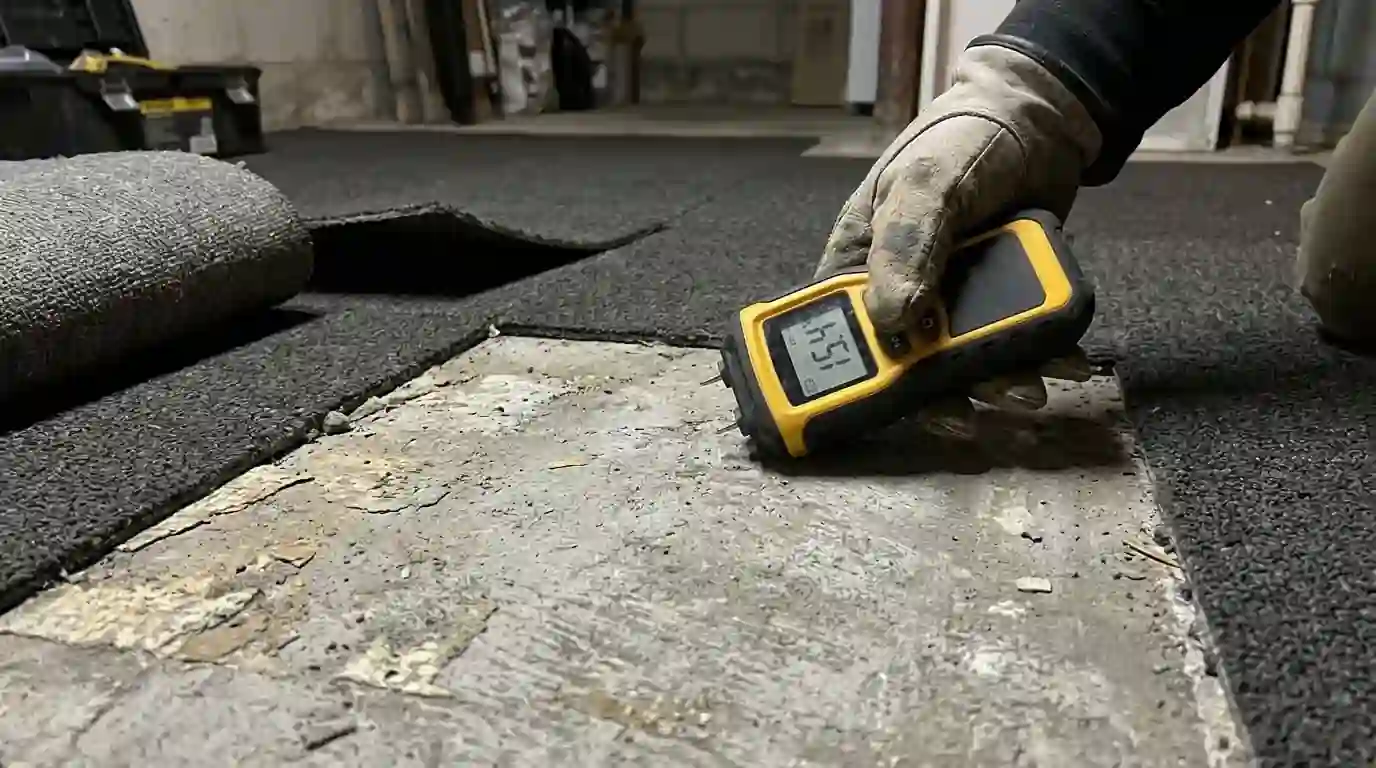
Before any floor goes down, the concrete has to be dry. A slab that looks dry can still hold moisture deep inside after a flood. We test it with a meter, and for a new floor installer, a moisture test to the flooring maker's standard is often required. Cracks that leaked during the flood should be sealed or addressed with drain tile before new flooring covers them.
Luxury vinyl plank and tile
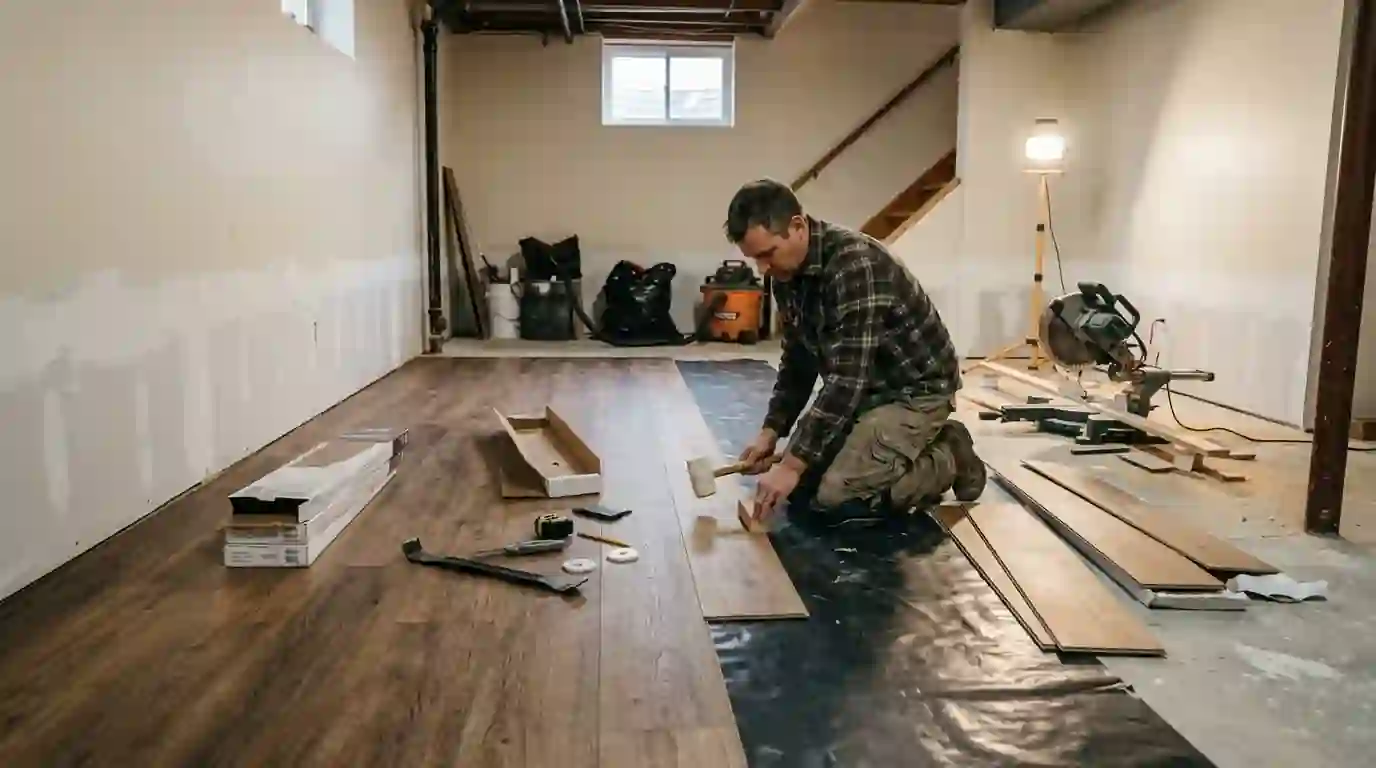
Luxury vinyl plank and tile handle water better than almost anything else that looks like wood. Most products are waterproof on the surface and can sometimes be lifted, dried and reinstalled after a clean water leak. They float over the slab, which also makes it easier to dry under them.
Porcelain and ceramic tile
Tile set directly on concrete is about as water-tolerant as a finished floor gets. It feels colder underfoot, so area rugs help. Grout should be sealed, and tile is harder to replace if the slab moves.
Carpet and carpet tile
Wall-to-wall carpet is comfortable but is usually the first loss in a basement flood, because the pad soaks up water. Carpet tiles are a middle ground: wet squares can be pulled, dried or replaced without redoing the whole room.
Engineered wood and laminate
Engineered wood and most laminate do not like water. Laminate's core swells when wet and rarely recovers. In a basement with any water history, we generally steer people away from both.
Rebuild details that help next time
Leave a small gap at the bottom of new drywall, use moisture-resistant drywall for the lower section, choose baseboard that tolerates moisture, keep furniture on legs and store boxes in plastic bins on shelves. Make sure the sump has a backup and alarm.
We can rebuild or hand it off
After drying, we can put the basement back together, flooring included, or leave a clean, dry space with a moisture report for your own flooring installer.