Old basements
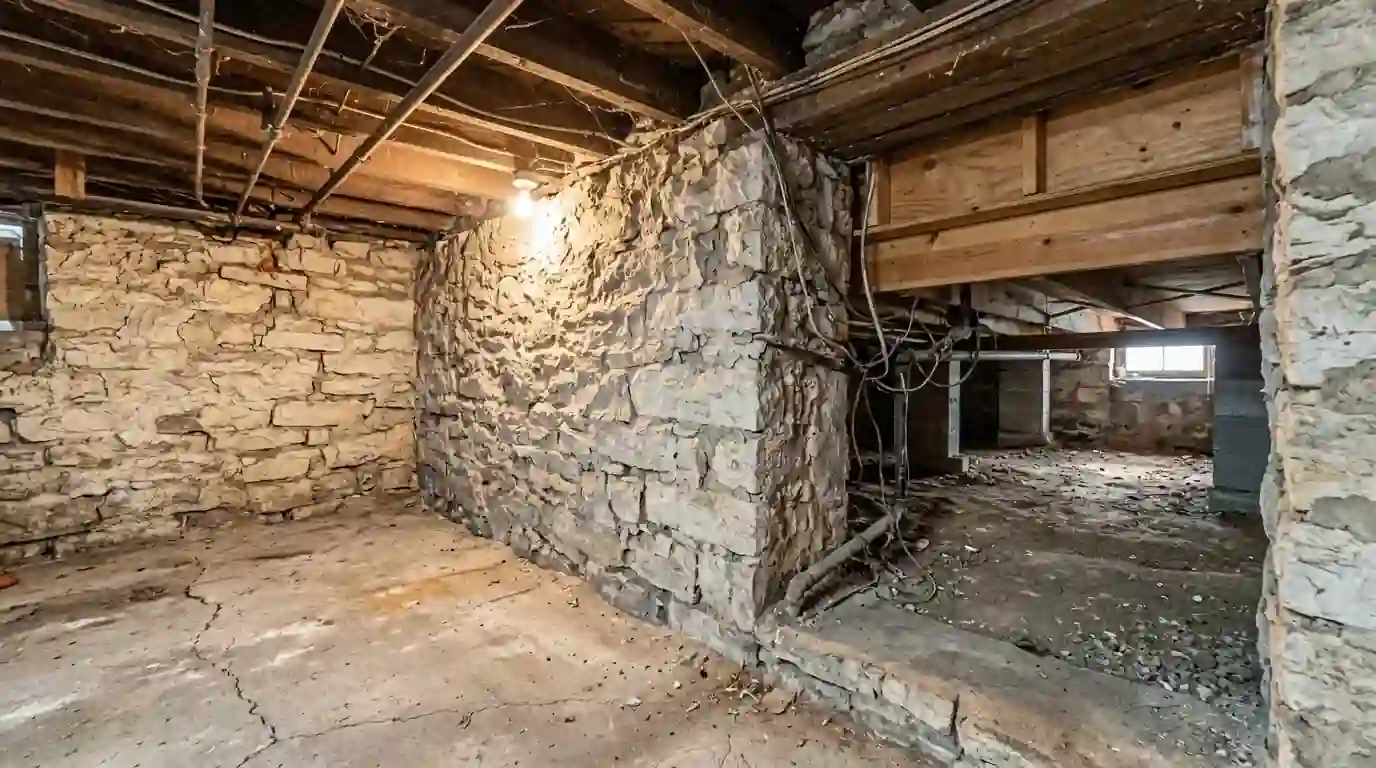
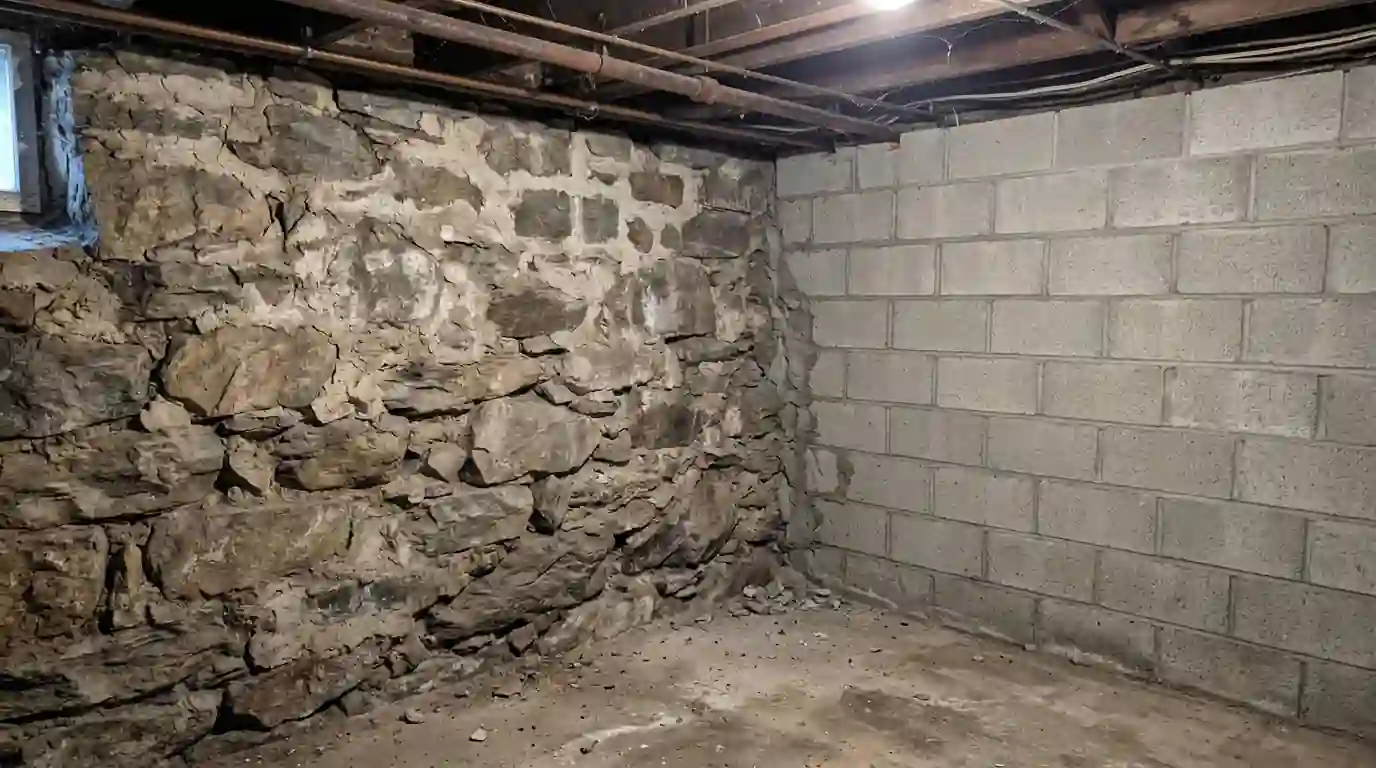
Stone or early block foundations let water in during wet seasons. Many were never meant to be living space. Dehumidification, drainage and keeping finished walls off the foundation help.
Crawl spaces
Dirt floors and vents bring in moisture. Mold on joists and musty air upstairs are common. Encapsulation is the lasting fix.
Where they meet
The joint between the old foundation and the addition is often where water and air leak. We check it on every inspection.
What to do first
Fix gutters and downspouts, then control humidity, then decide on bigger projects like drain tile or encapsulation.
How to check each space
In the basement, look at the floor joint and the lower few feet of walls after a hard rain, and use an inexpensive humidity meter in July. In the crawl space, open the hatch with a flashlight and look for standing water, sagging insulation, white or dark growth on joists and a strong earthy smell. A wet crawl space often shows up first as a musty smell in the room above it.
Common fixes for old basements
Extend downspouts several feet from the foundation, regrade soil so it slopes away from the house, keep finished walls a little off the foundation, and run a dehumidifier in summer. If water comes in along the floor joint every spring, interior drain tile with a sump is the standard fix.
Common fixes for crawl spaces
Remove wet or fallen insulation, lay a heavy vapor barrier sealed to the walls, close vents to humid summer air and add a dehumidifier. If water stands after rain, add a drain or small sump first.
Why old stone foundations need care
Stone and early block foundations were built to breathe. Sealing them tight on the inside with paint or foam can trap moisture in the masonry. Managing water outside and controlling humidity inside usually works better than coating the walls.
When to call
Call if water is standing, if you see mold on joists or the back of finished walls, or if a musty smell keeps coming back. We can measure both spaces, tell you which one is driving the moisture and fix the damage.