The usual suspects
Kitchen sinks on exterior walls, bathroom lines over unheated garages or porches, hose bib lines, pipes in crawl spaces and pipes in attached garages.
Before the cold
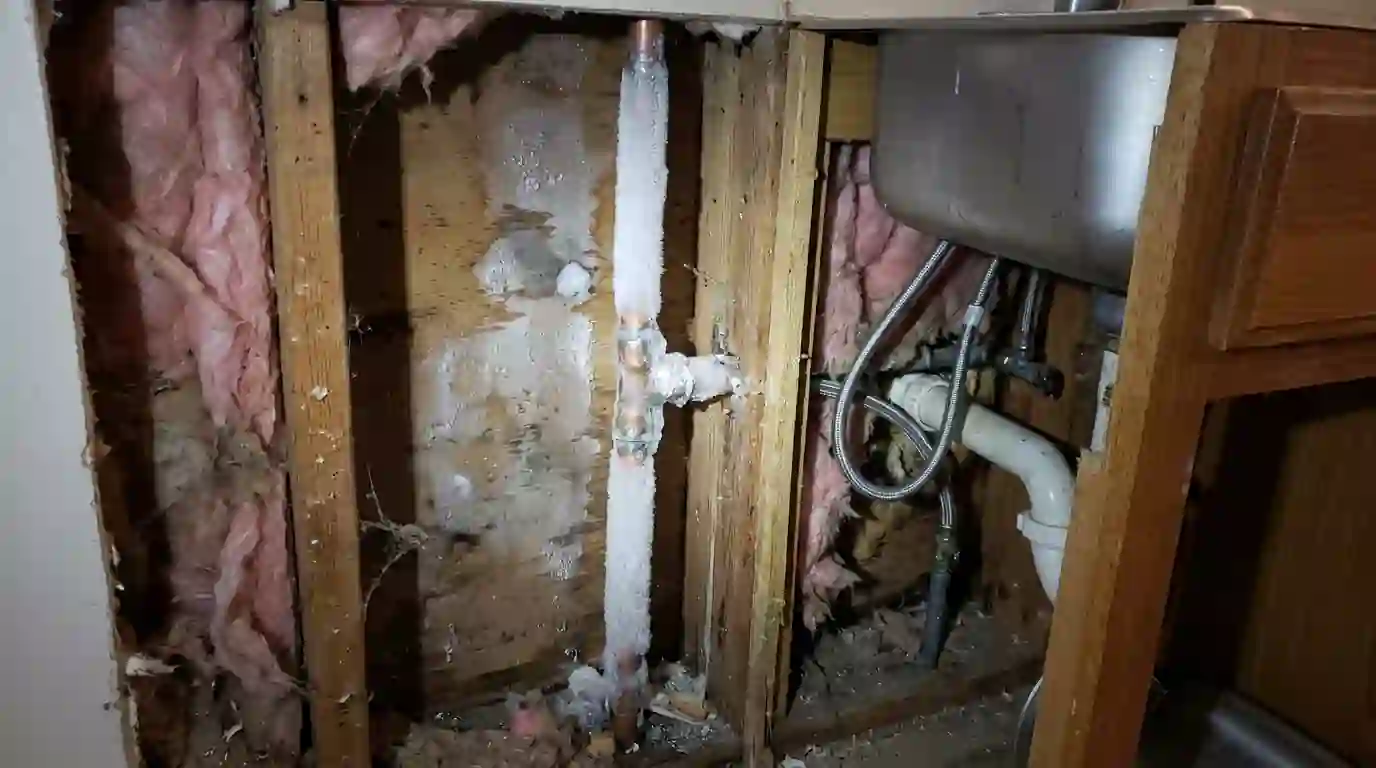
Insulate exposed pipes, seal gaps where cold air gets in, disconnect hoses, and know where your main shutoff is.
During a cold snap
Open cabinet doors on outside walls, let faucets drip on the coldest nights and keep the thermostat steady, not lower at night.
If a pipe bursts
Shut off the main water valve and open faucets to drain the system. Turn off power to wet areas. Call for cleanup and a plumber.
When you travel
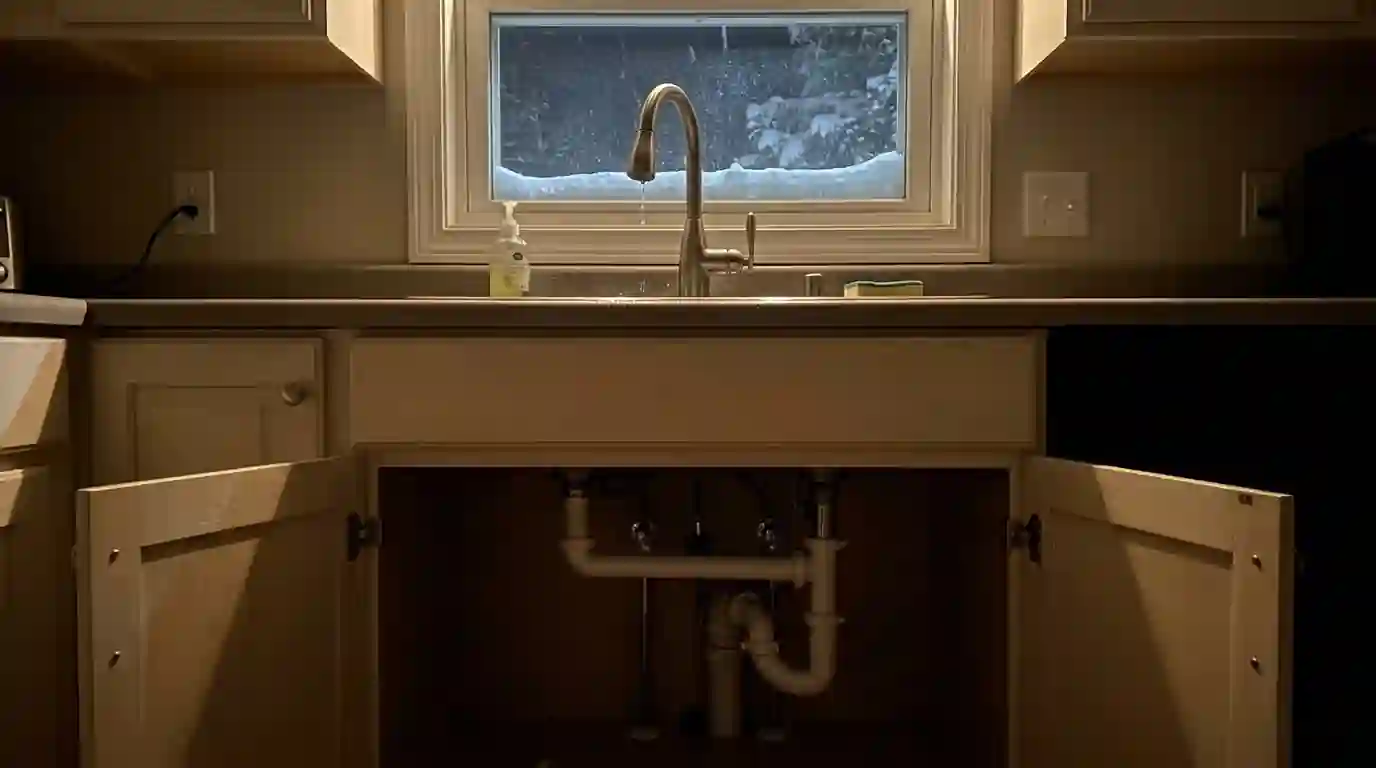
Keep the heat at 55 degrees or higher, ask someone to check the house and consider shutting off the main water.
Why pipes split where they do
Water freezes from the coldest point and pushes pressure ahead of the ice. The pipe often splits in a section that never froze, between the ice and a closed faucet. That is why the leak can appear several feet from the cold spot, and why opening the faucet on a frozen line helps relieve pressure.
If a pipe is frozen but not broken
Open the faucet it feeds. Warm the pipe slowly with a hair dryer, warm towels or a space heater kept a safe distance away, starting near the faucet and working back. Never use an open flame. If you cannot reach the frozen section or it is inside a wall, call a plumber.
What the damage looks like after
A burst line in an exterior wall usually shows up as water at the bottom of the wall or the ceiling below. Water runs along studs and joists, so we meter several feet in every direction before opening anything. Most of these walls can be dried with a flood cut or cavity drying once the plumber fixes the line.
Garages and crawl spaces
Attached garages in Joliet homes often have a laundry line or a hose bib running through them, and crawl spaces under additions often carry kitchen and bath lines. Insulating those runs, sealing gaps and keeping the garage door closed on bitter nights prevent most winter calls we get.