Carpet pad
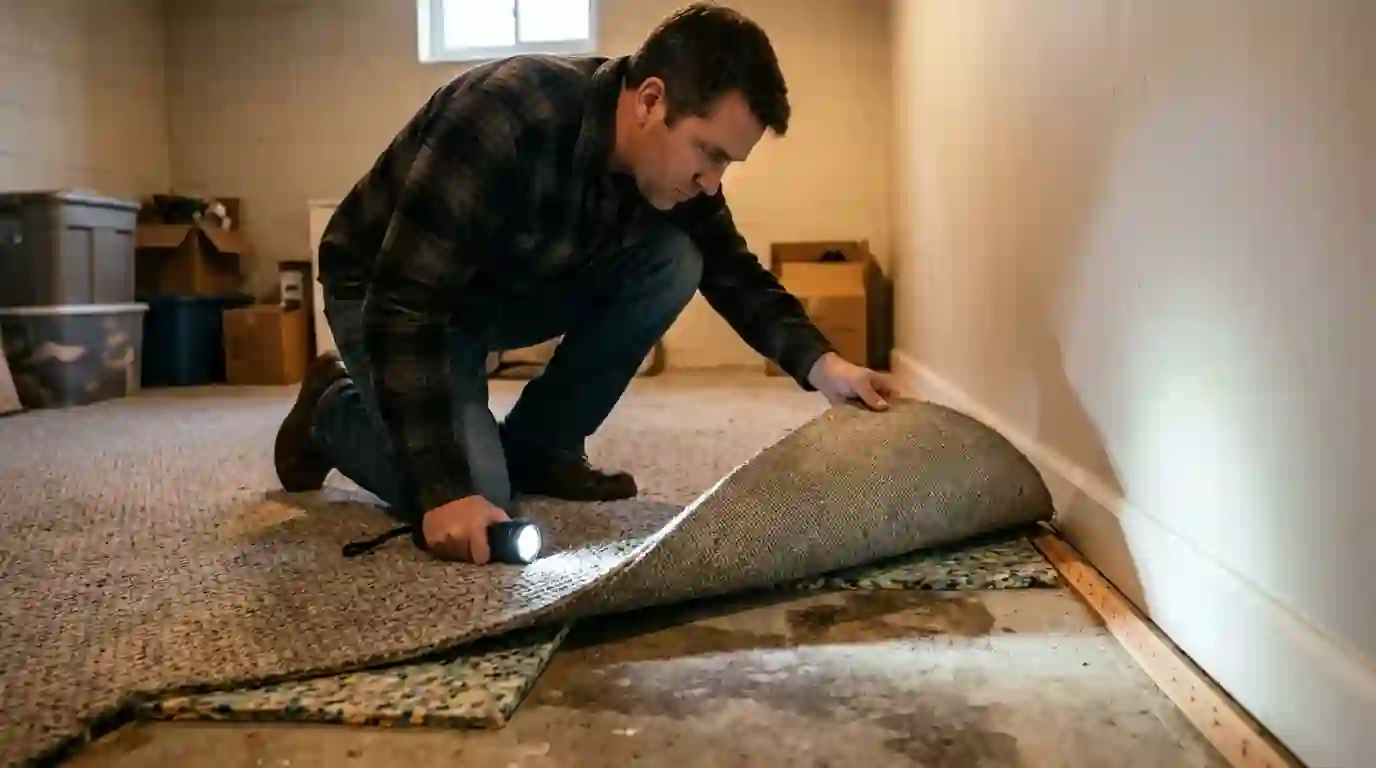
Basement carpet over concrete is the top suspect. The pad can stay damp from humidity or an old spill while the carpet looks fine. Lift a corner near an outside wall and smell it.
Boxes and stored items
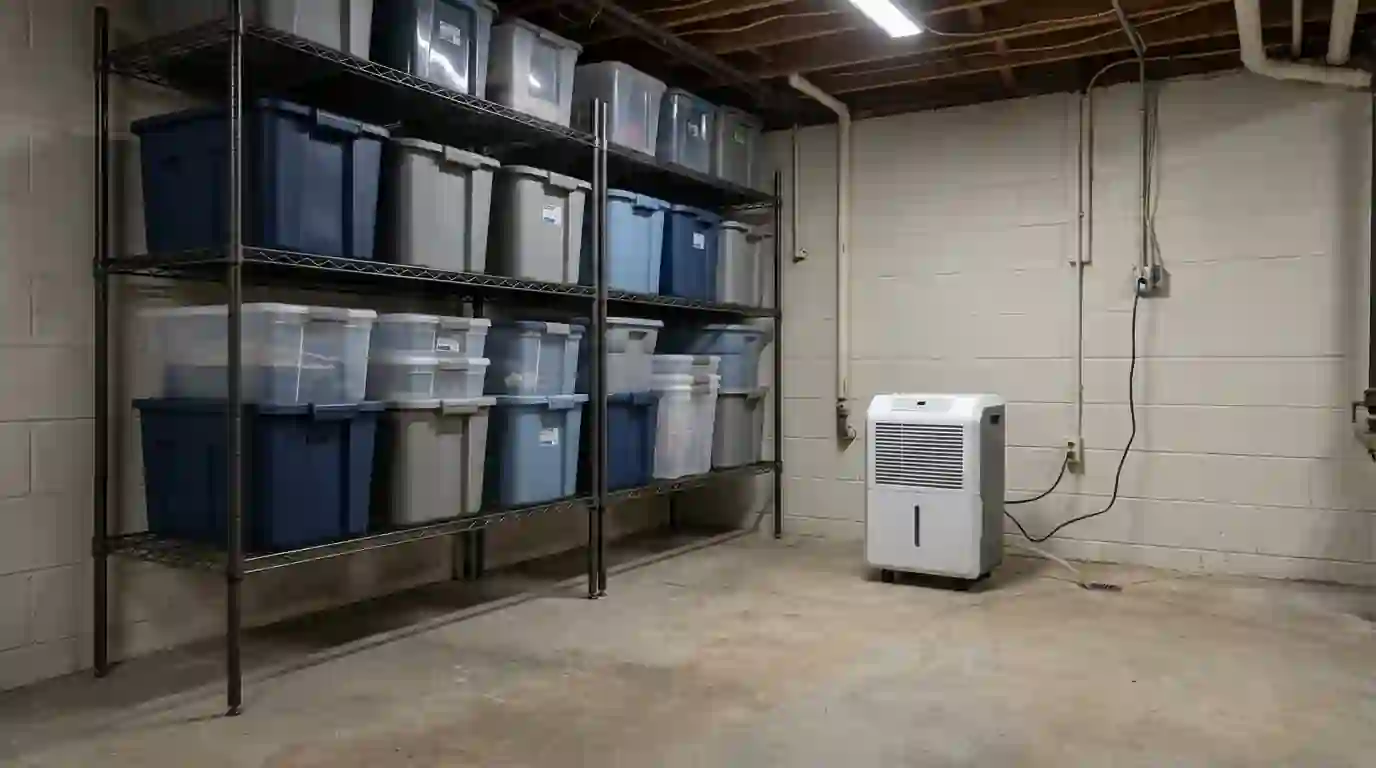
Cardboard on the floor or against an outside wall soaks up moisture and grows mold quickly. Move boxes onto shelves and use plastic bins.
Behind finished walls
Drywall or paneling installed tight to a basement wall can grow mold on the back side. Baseboard swelling or wet readings near the floor are clues.
Crawl spaces
A crawl space under an addition or sunroom can be the source of a smell on the main floor. Air rises from it into the house.
HVAC and drains
A musty smell when the system runs can point to a wet drain pan or ducts that sat in water. A dry floor drain trap can also let sewer odors in; pour a little water in it.
How we find it
We use our noses, moisture meters and a thermal camera to narrow it down, then open the smallest area needed to confirm. Once the source is removed or dried, HEPA air scrubbing clears what lingers.
Check these spots in order
Start with the lowest level: carpet corners along exterior walls, the bottom of paneling and drywall, the area around the sump pit and floor drain, under the basement stairs and inside any closet on an outside wall. Then check under kitchen and bathroom sinks upstairs, behind the washer and around the water heater. Finally, open the crawl space hatch if you have one, and look at the attic around bath fans.
What a moisture reading tells you
Most building materials read low when dry. A spot that reads much higher than the same material a few feet away is where water is. That is usually where the smell comes from, even if nothing is visible on the surface.
When the smell is the sewer, not mold
A sewer smell is sharper than a musty smell. It often comes from a dry floor drain trap, a loose toilet wax ring or a cracked vent pipe. Pour water into unused drains, and if the smell continues, call a plumber.