Why late winter
In Will County, the water table rises fast when frost leaves the ground in March and April. Pumps that sat idle all winter suddenly run every few minutes. A float that stuck, a check valve that failed or a battery that died over the winter all show up at the worst time. Checking before that rush gives you time to fix problems while plumbers and parts are easy to get.
Test the primary pump
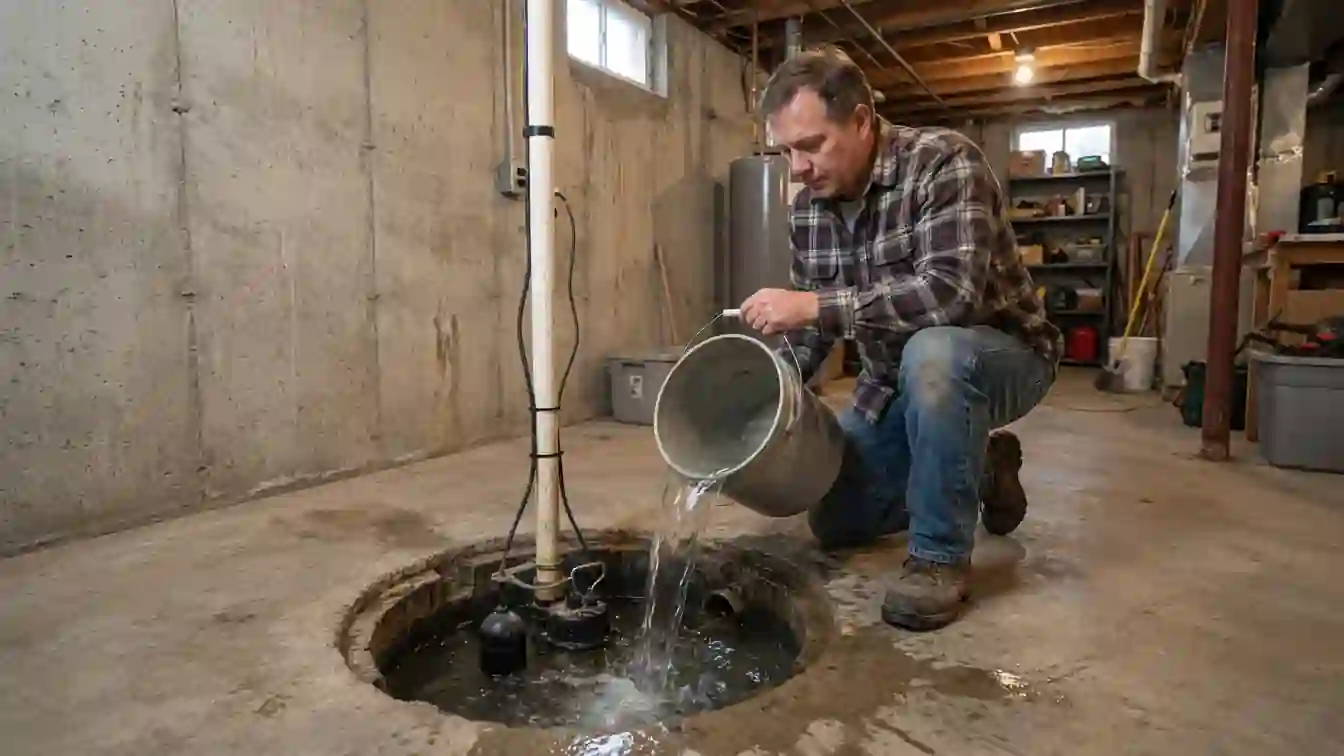
Pour a five gallon bucket of water slowly into the pit. The float should rise, the pump should start without humming or grinding, empty the pit and shut off cleanly. If it hums but does not move water, or runs and does not shut off, it needs attention. Unplug the pump before reaching into the pit for anything.
Check the float and pit
Look for debris, gravel or a loose cord that could pin the float against the side. A vertical float switch needs room to travel. Clear out silt at the bottom of the pit if it has built up. Make sure the pump sits level and is not resting on the bottom where it pulls in sediment.
Check the backup
If you have a battery backup pump, test it by unplugging the primary pump and running the bucket test again. Most backup batteries last about three to five years. Check the date on the battery and the condition of the terminals. A water-powered backup needs city water pressure and its supply valve open.
Check the alarm
A high-water alarm should sound when water rises above the normal pump level. Press its test button or lift its sensor. Replace its battery if it uses one. The alarm is what tells you about a problem before the floor is wet.
Check the discharge line
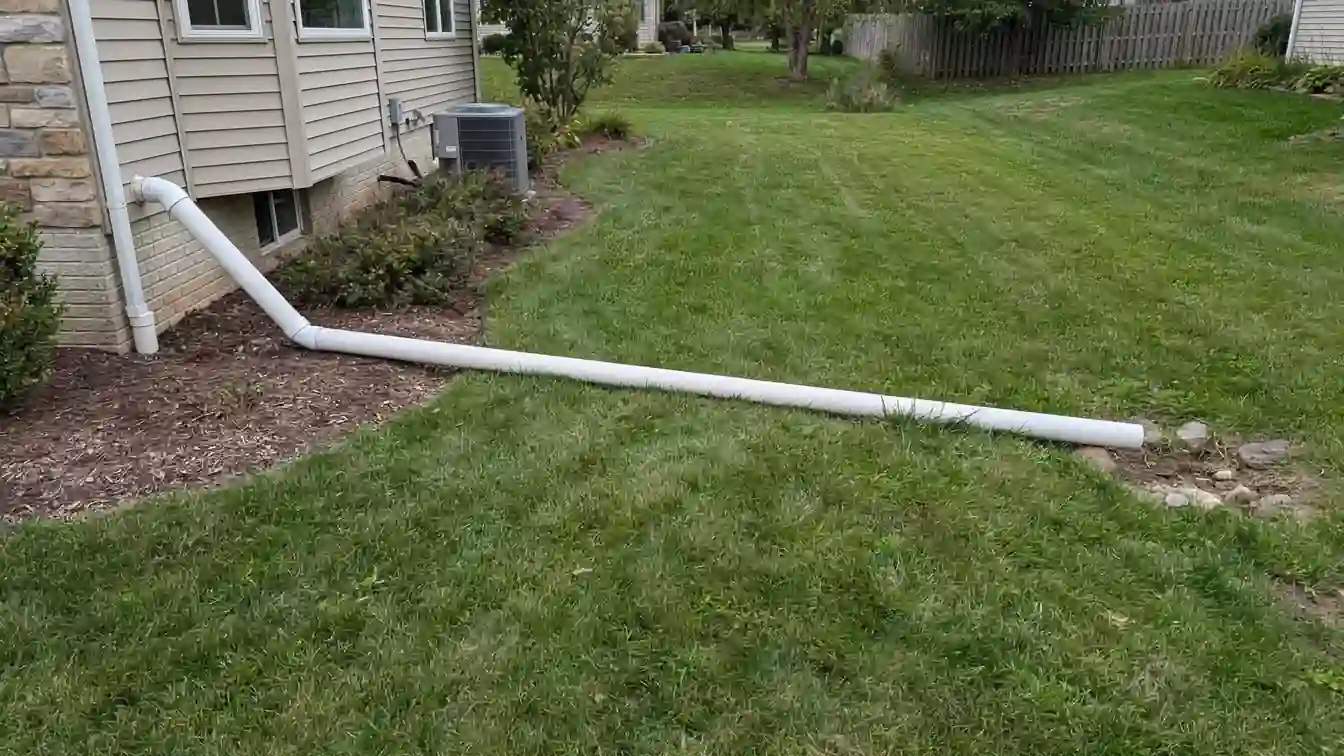
Go outside and follow the discharge pipe. It should send water well away from the foundation, not right back against the wall. Make sure the outlet is not frozen, buried or crushed. A blocked discharge makes the pump run without moving water.
Know the age of your pump
Many sump pumps last around seven to ten years, less if they run constantly. If yours is older and you have a finished basement, replacing it before spring costs far less than one cleanup. If you lose power often during storms, a battery backup is the next best upgrade.
If the basement already took water
If you find water during your check, or the pump fails during a thaw, call us. We extract, dry and can install a new pump with a backup and alarm in the same visit.