Get the water stopped
Knock on the door above. If nobody answers, call building management or the association's emergency line. Many buildings have a main shutoff for each stack or the whole building. Until the source is off, put buckets under drips and move belongings away. If the ceiling is sagging, keep people out from under it.
Protect yourself from electrical risk
If water is coming through a light fixture or near outlets, turn off power to that area at your breaker panel. Do not touch wet fixtures.
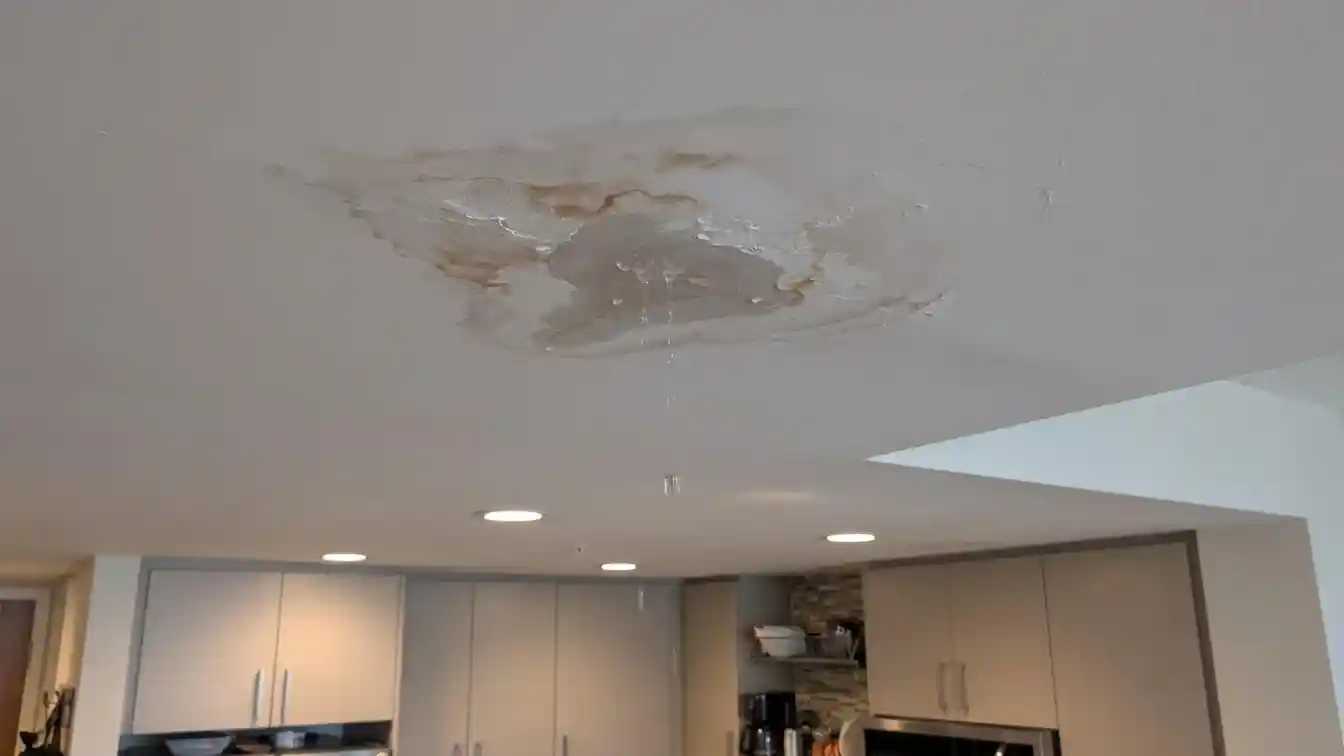
Photograph everything
Take photos and video of the ceiling, walls, floors and damaged items before you move or clean anything. Note the time you first saw water and who you contacted. These records help your insurer, the neighbor's insurer and the association figure out responsibility.
Notify the right people
Tell your neighbor, management or the association in writing, even if it is a quick email. Then call your own insurance company. Coverage in condos often splits between the association's building policy and each owner's unit policy, and the rules are in your governing documents.
Why your unit needs drying even if it looks fine
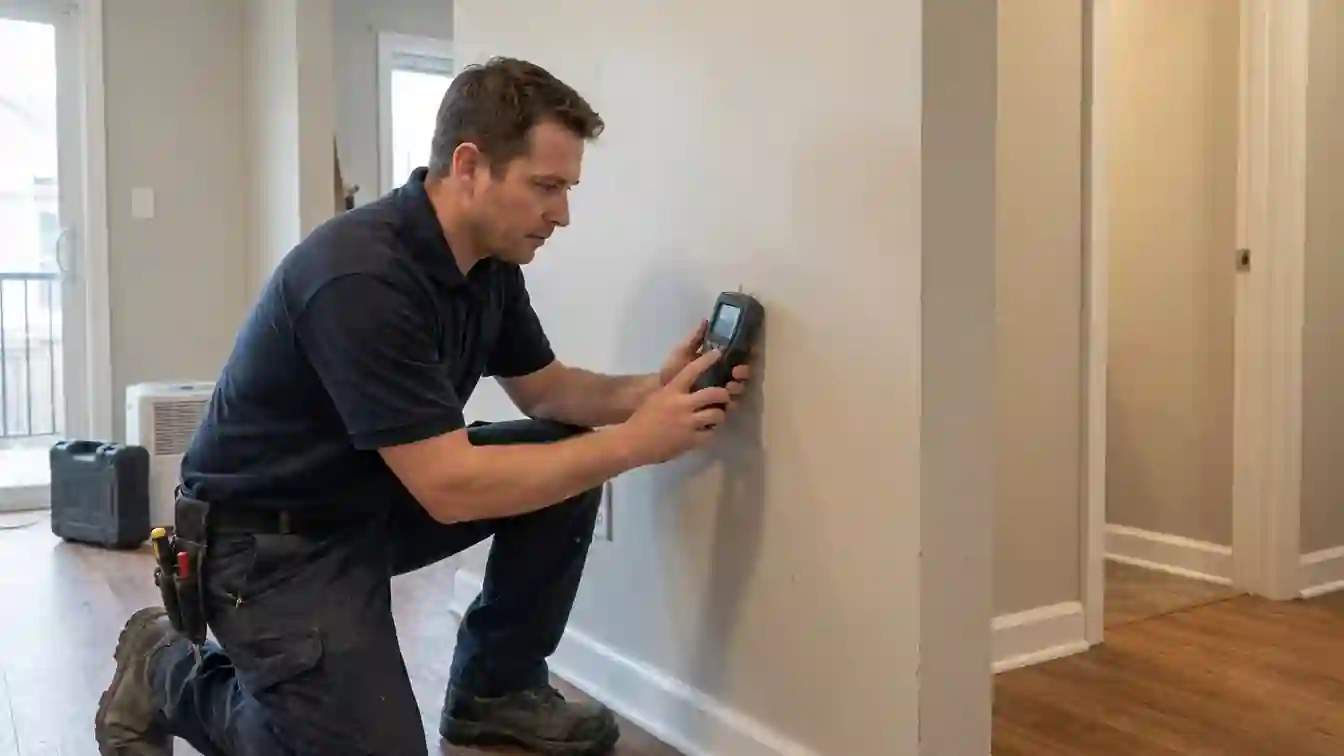
Water that came through your ceiling also ran through the ceiling cavity, insulation and sometimes down inside walls. A unit can look dry on the surface while the framing stays wet for days. We meter ceilings, walls and floors, open only what has to be opened and dry with equipment sized for the space.
Separate records for every unit
We keep separate moisture maps, drying logs, photos and scopes for each unit involved. That makes it far easier for each owner's adjuster and the association to agree on what happened where.
When to call us
Call as soon as water appears. We can coordinate with management and your neighbor to reach the source unit, and start drying yours the same day.